
There’s something special about picking up a 1911: its weight, balance, and the trigger. It feels like history and performance wrapped into one clean machine.
But here’s the truth most shooters learn the hard way…
If your 1911 Grip Safety isn’t fully engaged, the gun simply won’t fire.
And nothing kills confidence faster than lining up the perfect shot… pressing the trigger… and getting nothing.
If you’ve ever thought, “Why didn’t it fire?” Your grip safety probably wasn’t fully depressed.
The good news? This isn’t a complicated fix. It’s all about technique, fit, and a few small upgrades.
Today, we’re breaking it down in simple, no-nonsense terms so you can engage your safety every time without thinking twice
First: What Does Grip Safety Actually Do?
A grip safety is a spring-loaded lever on the backstrap of a pistol that blocks the trigger until your hand fully depresses it, meaning the gun can’t fire unless it’s being held correctly.
Before we fix something, we need to understand it. The 1911 safety is the lever on the backstrap. When you hold the pistol correctly, your palm presses it inward. Only then can the trigger move.
Do All 1911s Have a Grip Safety?
Yes, virtually all standard 1911 pistols have a grip safety on the backstrap, by original design. A few competition or custom builds have it pinned (deactivated), but factory 1911s ship with a functioning grip safety that must be depressed before the gun will fire.
It’s a brilliant design:
- Prevents accidental discharge
- Adds an extra layer of safety
- Forces proper hand placement
Why Shooters Fail to Engage It (More Often Than They Admit)
Most people assume:
“If I’m holding the gun, it should just work.”
Not exactly. Here’s what actually happens:
Common causes
- Grip too low on the frame
- Weak or partial hand contact
- Riding the thumb safety awkwardly
- Small hands with wide grip panels
- Aftermarket parts poorly fitted
- Wearing gloves
Sometimes it’s technique and sometimes it’s hardware.
Usually… It’s both.
Step 1: Learn Proper Hand Placement (The Foundation)
Before you buy anything or change parts, fix your grip. Seriously; 80% of issues disappear right here. If you’ve never studied how to hold a 1911, here’s the simple version:
The High-Tang Grip Method
- Place the web of your hand as high as possible under the beavertail
- Drive your palm straight into the backstrap
- Wrap fingers tight, front to back pressure
- Support hand fills the empty space
When you grip high and tight, the safety naturally disappears into your palm. So, you don’t need any conscious effort.
Step 2: Fix These Classic Errors Immediately
Let’s talk about the sneaky stuff. These small habits quietly sabotage engagement.
Here are some big 1911 grip mistakes you need to avoid:
❌ Holding too low
❌ “Teacup” or loose support hand
❌ Thumbs stacked weirdly
❌ Weak wrists
❌ One-hand shooting without pressure
If your hand floats even slightly off the backstrap, the safety might not fully depress. And under stress? Your grip gets worse.
Step 3: Strengthen Your Grip (Yes, It Matters)
Some shooters simply don’t squeeze hard enough. Especially new shooters or folks with smaller hands.
Try this:
Easy drills
- Hand grippers
- Tennis ball squeezes
- Dry fire reps with firm pressure
- 10-second crush holds
Stronger hands means more consistent engagement, plus better recoil control
Step 4: Make Sure Your Grips Fit YOU (Not Just Look Cool)
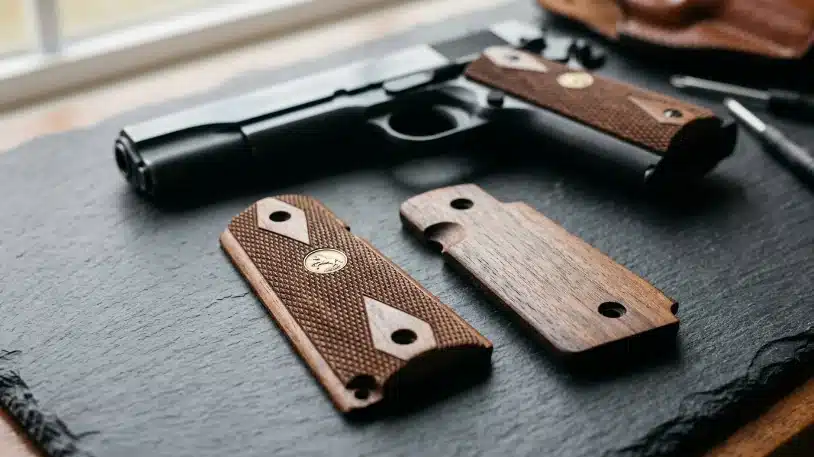
Here’s something most people overlook: Factory grip panels don’t fit everyone.
If your grips are too thick or slick, your palm may not sit deep enough to press the safety. That’s where better 1911 grips make a huge difference.
The right texture and thickness help:
- Pull the gun into your palm
- Improve traction
- Increase pressure on the backstrap
- Reduce shifting during recoil
It’s crazy how much control changes with the right panels.
Shooters often upgrade sights first… But grips actually affect performance more.
Step 5: Upgrade Smart, Not Fancy
Let’s talk about hardware. Sometimes your technique is perfect… but the safety still feels inconsistent.
That’s when you look at parts.
Mechanical Causes
If your 1911 grip safety not working, it could be:
- Weak spring tension
- Poor factory fit
- Cheap cast part
- Excess wear
- Incorrect installation
In those cases, consider a 1911 grip safety replacement, but don’t just swap blindly.
Step 6: Check the Small Parts Most People Forget
Tiny components means big reliability. Inside the frame, pay attention to:
- 1911 grip safety pin (wear or looseness)
- 1911 grip safety spring (tension issues)
If these are worn or weak, engagement can feel mushy or incomplete. Luckily, they’re cheap and easy to inspect.
Step 7: Train Engagement Until It’s Automatic
You shouldn’t think:
“Did I press the safety?”
Try this drill
- Unloaded gun
- Grip → present → dry fire
- Repeat 50 times daily
Focus on crushing the backstrap every single time. After a week, your hand naturally locks into place.
Bonus Tip: Gloves & Cold Weather
Here’s a weird one people don’t expect:
Gloves can block full contact. Thick material can soften palm pressure.
If you shoot in winter:
- Use thin tactical gloves
- Or grip harder
- Or test reliability beforehand
Step 8: Choose Grips That Help You, Not Fight You
This is where personalization changes everything. Different materials give different feels:
Wood
Classic look, medium traction
G10 / aggressive texture
Maximum control
Rubber
Soft, shock absorbing
Smooth acrylic
More style than function
If your goal is reliable safety engagement, traction matters more than looks. That’s why many shooters look for the best 1911 grips for better control instead of just flashy designs.
Why This Matters More Than You Think
This isn’t just about convenience. It’s about:
- Defensive reliability
- Competition speed
- Confidence
- Consistency
When your gun doesn’t fire, even once, doubt creeps in. And doubt ruins shooting.
Quick Checklist (Save This)
Before your next range trip:
✅ High grip under beavertail
✅ Firm squeeze
✅ Correct hand placement
✅ Properly fitted parts
✅ Good textured grips
✅ Dry fire reps
Follow this and your 1911 Grip Safety will engage like clockwork.
Where Smart Shooters Upgrade
Let’s be honest. Technique matters most, but equipment still plays a big role.
If your grips are slippery, bulky, or poorly shaped, you’re fighting the gun every shot. That’s unnecessary.
This is exactly why shooters turn to Premium Grips.
Our panels are designed for:
- Better palm contact
- Strong traction
- Solid control
- Clean fit on popular 1911 models
- Styles from tactical to classic
So you get both performance and personality, because your 1911 shouldn’t just run well… It should feel like it was made for your hand.
Conclusion
Mastering the 1911 Safety isn’t complicated, it’s just a mix of:
- Good technique
- Smart fitting
- Strong grip
- Proper equipment
Dial those in and you’ll never think about it again.
If you’re ready to upgrade control and comfort, explore better-fitting grip options and make the gun truly yours.
Frequently Asked Questions
Do 1911s have grip safety?
Yes, all standard 1911 pistols come equipped with a grip safety located at the back of the grip. This safety mechanism must be depressed by your hand grip before the trigger can be pulled, adding an extra layer of protection against accidental discharge.
How does grip safety work?
The grip safety is a lever on the backstrap that blocks the trigger mechanism when not pressed. When you properly grip the pistol, your palm naturally depresses the grip safety, allowing the gun to fire.
How does the safety work on a 1911?
The 1911 features multiple safeties including a grip safety, thumb safety, and half-cock notch. The thumb safety manually locks the sear when engaged, while the grip safety prevents firing unless properly held. Both must be disengaged simultaneously for the pistol to fire.
Do 1911s have a drop safety?
Yes, most modern 1911s include a firing pin block or “Series 80” drop safety that prevents the firing pin from moving forward unless the trigger is pulled.
What is the weakness of the 1911?
The main drawbacks are its single-stack magazine capacity (typically 7-8 rounds versus 15+ in modern pistols) and its weight compared to polymer-framed alternatives. High-quality 1911 gun grips enhance control, comfort, and safety, especially for new shooters learning to manage the pistol’s manual safeties.