
You just picked up a beautiful Heritage Rough Rider or a classic 1911, and now you’re staring at a screen full of grip options wondering rosewood or walnut? Both look gorgeous in the photos. Both have loyal shooters who swear by them. And both are made from real wood, so how different can they really be?
Pretty different, actually.
The rosewood vs walnut gun grips debate is one of the most common questions we get here at Premium Grips, and it deserves a real answer instead of just “it depends on your preference.”
In this guide, we’re breaking down the actual differences: hardness, color, grain, durability, feel in your hand, and which one makes more sense for your specific firearm and lifestyle.
Let’s get into it.
First, Why Wood Grips at All?
Before we pit these two materials against each other, it’s worth asking why gun owners keep coming back to wood in the first place, especially when polymer, rubber, and G10 options exist.
Simple: wood grips feel like the real thing. There’s warmth, character, and weight to a wood grip that no synthetic can fully copy. Every piece is slightly unique. The wood grain tells a different story on every panel. And when you’ve got a classic firearm, whether it’s a vintage-style revolver or a timeless 1911, plastic just doesn’t do it justice.
Wood also ages beautifully. It develops a patina over time that tells the story of every range session and carry day.
So between rosewood and walnut; both popular, both legitimate; which one is actually better for you?
What Is Rosewood?
Rosewood is a dense, tropical hardwood sourced primarily from India, Brazil, and parts of Southeast Asia. It gets its name not from any rose connection, but from the faint rosy, sweet smell the wood releases when freshly cut.
For gun grips, rosewood is one of the most popular materials we work with, and for good reason.
Color
Deep reddish-brown to dark burgundy, often with rich streaks of black and purple running through it. The color variation from panel to panel is part of what makes rosewood so visually striking. No two grip sets look identical.
Wood Grain
Rosewood has a fine, tight grain pattern. The lines are close together and smooth, which allows for incredibly crisp checkering and engraving work. If you’ve ever looked at a rosewood grip with a diamond checkering pattern and thought that’s sharp, the wood’s tight grain is exactly why.
Hardness (Janka Rating)
This is where rosewood really stands out. Brazilian rosewood clocks in at an impressive 2,720 lbf on the Janka scale, while Indian rosewood sits around 3,000 lbf. Even on the lower end, rosewood is extremely hard, harder than most domestic hardwoods.
Feel
It feels dense and smooth. Rosewood grips feel solid in the hand, almost like holding a polished stone. When checkered, they provide excellent purchase without feeling aggressive.
What Is Walnut?
Walnut, specifically black walnut and Claro walnut, has been the grip wood of choice for American gunsmiths for over a century. Walk into any old-school gun shop and there’s a solid chance most of the wooden grips on display are walnut.
Color
Walnut ranges from warm chocolate brown to grayish-brown, with occasional golden and purple highlights depending on the specific piece. The color variation is subtler than rosewood; more uniform, more understated. It shows a classic and dignified look.
Wood Grain
Walnut has a medium-to-open grain pattern. The wood grain is often wavy or figured, especially in higher-grade pieces where you’ll see flame, burl, or feather patterns. This open grain gives walnut a more organic, natural feel compared to the tighter, more uniform look of rosewood.
Hardness (Janka Rating)
Black walnut scores around 1,010 lbf on the Janka scale, significantly softer than rosewood. That said, it’s still plenty hard for grip applications. It resists normal wear well, handles checkering cleanly, and won’t dent from everyday handling.
Feel
Walnut has a slight warmth feel that many shooters describe as more natural in the hand. It’s lighter than rosewood, which some people prefer, especially on already heavy full-size pistols.
Rosewood vs Walnut Gun Grips: Head-to-Head
Let’s put them side by side across the categories that actually matter to gun owners.
Hardness and Durability
When comparing rosewood vs walnut gun grips purely on hardness, rosewood wins, and it’s not close. Rosewood’s Janka rating of 2,700 to 3,000 lbf versus walnut’s 1,010 lbf means rosewood is roughly 2x to 3x harder.
What does that mean in practice? Rosewood resists surface scratches and dings better. If you’re a daily carrier or someone who puts real mileage on your firearm, rosewood holds up longer before showing signs of wear.
Walnut, while softer, is still a genuinely tough wood. It’s been used on hunting rifles and duty firearms for generations. You’d have to work pretty hard to damage walnut grips under normal use. The difference becomes more noticeable over years, not weeks.
Color and Aesthetics
This is where personal preference takes over, but there are real distinctions worth knowing.
Rosewood’s deep reds and dark purples make it the showier wood. It photographs beautifully and commands attention. The color variation within a single set can be significant. One panel might be reddish-brown while the other leans darker.
Walnut is the gentleman’s wood. The color variation is gentle; warm browns with occasional highlights. It pairs naturally with blued steel, stainless, and case-hardened finishes alike. If your goal is a classic, elegant look that works on almost any firearm, walnut rarely misses.
According to Virginia Tech / Wood Products Research:
“The lower the grade, the more color variations and characters like sapwood, streaks, small knots, or worm holes are allowed.”
Checkering and Carving
Both woods take checkering well, but the tighter wood grain of rosewood gives it a slight edge when it comes to ultra-fine patterns. Checkering on rosewood tends to be crisper and more defined, especially at higher line-per-inch counts.
Walnut, with its slightly more open grain, still takes checkering beautifully, but very fine checkering patterns can occasionally tear slightly along the grain if not done perfectly.
At normal checkering densities (20–24 LPI), walnut looks excellent. For highly decorative, deeply carved work, rosewood tends to hold the finest details a bit better.
Weight
Rosewood is denser, which means heavier. On a lightweight revolver or compact carry gun, that added weight from denser grips can shift balance and feel. For some shooters that’s actually a benefit, it tames recoil slightly and makes the gun feel more substantial.
On a heavier full-size pistol, you might not even notice the difference. But if you’re fitting grips to a North American Arms mini-revolver or a compact Bond Arms derringer, the weight difference between rosewood and walnut is worth thinking about.
Maintenance and Care
Both rosewood and walnut require occasional maintenance to stay looking their best. The basics are the same for both: keep them clean, dry, and occasionally treat them with a quality wood conditioner.
If you want the full breakdown on this, including what products to use and what to avoid, check out our guide on how to clean wood gun grips. It covers both wood types in detail.
One worth noting: rosewood is naturally oilier than walnut. This is actually a good thing, it means rosewood requires less frequent conditioning to stay hydrated and protected.
Which Wood Is Right for Which Firearm?
Here’s a practical breakdown based on firearm type:
1911 Pistols
The 1911 platform is a natural home for both woods, but rosewood tends to be the more popular choice here. The deep reddish tones contrast beautifully with polished bluing or satin stainless finishes. Our checkered and carved 1911 grips in rosewood are consistently among our best sellers for good reason.
Heritage Arms Revolvers
Heritage Arms single-action revolvers have a Western aesthetic that lends itself to both materials, but with a slight nod toward rosewood for the visual drama it brings. The warm reddish tones complement the traditional styling of these guns perfectly. Our Heritage Arms grips in rosewood tend to draw the most attention for a reason.
Smith & Wesson Revolvers
For K-frame, L-frame, and J-frame revolvers, walnut is a classic pairing. The understated elegance of walnut works beautifully with S&W’s traditional revolver aesthetic. So, if you want something that turns heads at the range, rosewood on a Smith & Wesson grips platform; especially stainless models; is hard to beat visually.
Colt Python and Colt 1911
The Python is a collector’s gun, and collectors tend to go two directions: period-correct walnut for authenticity, or premium rosewood for display. Our Colt grips are available in both; and honestly, the Python looks stunning in either.
The Color Question: Will It Match My Finish?
This matters more than people expect.
Blued Steel
Pairs with both. Rosewood’s deep red pops against the blue-black finish. Walnut blends in for a cohesive, dark look.
Stainless Steel
Rosewood tends to shine here. The contrast between bright silver metal and dark reddish wood is attractive. Walnut on stainless can sometimes look a little flat.
Case-Hardened
Walnut is the traditional match. The muted, natural tones of walnut complement case-hardened finishes without competing with them.
Nickel-Plated
Either works, but rosewood creates a particularly striking combination.
Common Misconceptions
Rosewood Grips Are Always Darker
It’s not true at all. Color variation within rosewood can be significant. Some pieces lean toward a medium reddish-brown, others nearly approach black. Always check the specific product photos.
Walnut Is a Cheap Substitute
Absolutely not. Premium grade walnut; especially highly figured Claro walnut; is more expensive than average rosewood.
Harder Wood Always Means Better Grip
Not necessarily. In a high-checkering-density grip, a slightly softer wood can feel more comfortable on the hand during extended shooting sessions.
Our Rosewood “Gold Rush” Heritage Rough Rider grips highlight how rosewood’s tight grain allows crisp scroll carving while maintaining durability for regular shooting.
Quick Reference: Rosewood vs Walnut Gun Grips
| Feature | Rosewood | Walnut |
| Janka Hardness | 2,700–3,000 lbf | ~1,010 lbf |
| Color | Deep red, dark burgundy | Warm chocolate brown |
| Wood Grain | Fine and tight | Medium, often figured |
| Checkering Quality | Excellent (ultra-fine detail) | Very good |
| Weight | Heavier | Lighter |
| Maintenance | Lower (naturally oily) | Moderate |
| Best For | Daily carry, show guns | Classic/traditional builds |
| Aesthetic | Bold, dramatic | Understated, elegant |
So, Which One Should You Choose?
If you want maximum durability, bold aesthetics, and lower maintenance, go rosewood. It’s the harder, richer-looking wood that holds up to heavy use and turns heads.
If you want a classic, timeless look with a lighter feel and that traditional American guncraft aesthetic, choose walnut. It’s been trusted on fine firearms for over a century for good reason.
Most serious gun enthusiasts end up with both eventually. And once you’ve had one quality wood grip set on your firearm, you’ll wonder why you waited so long.
Browse Our Collection
At Premium Grips, every grip; rosewood or walnut; is crafted with precision fit, proper checkering, and premium packaging. Every order ships with all necessary hardware so you can install and go.
We make grips for over 20 firearm brands, with hundreds of configurations in stock. Whether you’re upgrading a classic 1911, a Heritage Rough Rider, or a Smith & Wesson revolver, we’ve got a wood grip set that fits your gun and your style.
Read Also: G10 vs Wood Gun Grips & Rubber Grips: Which Material Is Right for You?
Frequently Asked Questions
Which is harder: rosewood or walnut?
Rosewood is generally harder than walnut. It usually has a higher Janka rating, which means it resists dents and scratches better during regular use. Walnut is still a durable hardwood, but rosewood tends to handle heavy wear slightly better.
Does rosewood darken over time?
Yes, rosewood can darken slightly as it ages. Exposure to light and natural oils from handling may deepen its rich tones and enhance the natural wood grain, giving the grips a more mature and polished look over time.
Is walnut more affordable than rosewood?
In many cases, walnut grips are more affordable than rosewood. Walnut is widely available and easier to work with, which can reduce manufacturing costs. Rosewood’s density, darker color, and premium appearance often make it slightly more expensive.
Which wood takes checkering better?
Both woods can hold checkering well, but rosewood’s greater hardness often allows for sharper, more defined patterns. Walnut also accepts checkering nicely, though its slightly softer texture may create a smoother feel in the grip pattern.
Do rosewood grips need more maintenance than walnut?
No, both woods require similar basic care. Regular wiping and occasional conditioning help preserve the color variation and protect the surface. Rosewood’s natural oils can actually help it resist drying, making maintenance fairly simple for both materials.
Related Posts
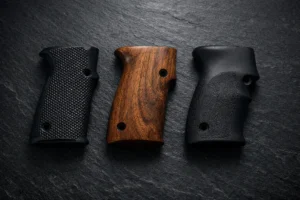
G10 vs Wood Gun Grips & Rubber Grips: Which Material Is Right for You?
You just picked up a new 1911 or a classic revolver. It shoots great, but…
Read More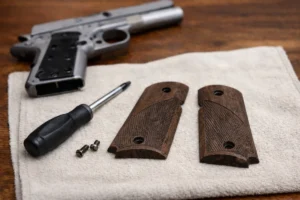
How to Clean Wood Gun Grips: Conditioning and Protection Guide for Rosewood, Walnut & More
You spent good money on a beautiful set of rosewood or walnut grips. They look…
Read More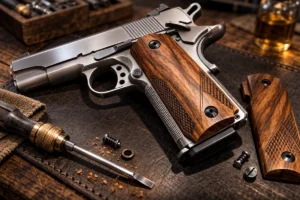
How to Install 1911 Grips & Revolver Grips: Complete Guide
You just got a fresh set of grips in the mail. The packaging is perfect,…
Read More