How Hand Size Affects Your 1911 Grip? (Complete Guide)
- teamA-GG
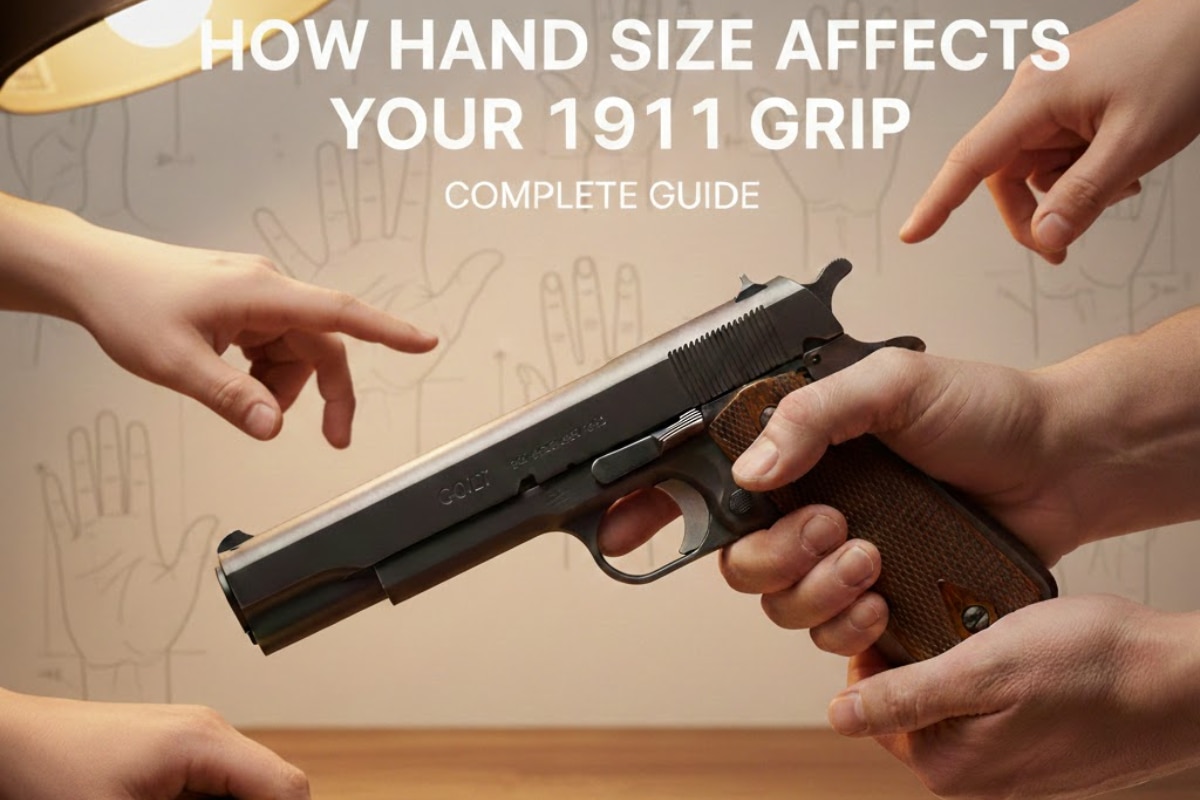
Ever picked up a 1911 and felt like something just wasn’t right? Maybe your finger barely reaches the trigger, or perhaps you can’t get a solid, comfortable hold on the grip. But how hand size affects your 1911 grip is about control, accuracy, and safety.
And here’s the kicker: the 1911 wasn’t designed with your specific hand in mind. John Browning created this legendary pistol back in the late 1890s, and while it’s been refined over the decades, the basic grip angle and dimensions have stayed remarkably similar.
That means shooters with smaller or larger hands often need to make adjustments to get the most out of their firearm.
If you’ve ever wondered why your buddy can shoot tight groups while you’re struggling with the same gun, hand fit might be your answer. Let’s dive deep into understanding how hand size affects your 1911 grip and what you can actually do about it.
Why Hand Size Matters More Than You Think?
Think about it this way: your hand is the interface between your brain and the firearm. If that interface doesn’t fit properly, everything downstream suffers. Your trigger control gets sloppy, you can’t manage recoil, and your follow-up shots take longer.
And worst of all? You might develop bad habits trying to compensate for a poor fit.
The good news? Once you understand the problem, the solution is usually straightforward and affordable. You don’t need to buy a new gun, you just need the right grips.
Measuring Your Hand for 1911 Compatibility
Before we get into solutions, let’s figure out where you stand. Grab a ruler or tape measure and let’s get some numbers.
Measure Your Grip Circumference
Place your dominant hand flat on a table. Measure the distance around your hand at the knuckles (excluding your thumb). Don’t measure your palm, measure at the widest part of your closed fist.
Measure Your Trigger Reach
This one’s simple. Make a fist like you’re gripping a pistol. Measure from the center of the web of your hand (between thumb and index finger) to the tip of your trigger finger.
These measurements will help you understand how hand size affects your 1911 grip in practical terms. Now let’s talk about what to do with this information.
The Small Hands Challenge: Getting Proper Control
If you’ve got smaller hands, you’re not alone. Plenty of shooters, especially women entering the firearms world, struggle with the standard 1911 grip dimensions. The 1911 for small hands can be challenging, but it’s absolutely manageable with the right setup.
The Problem: Standard 1911 grips add bulk that makes the 1911 grip circumference small hands can barely wrap around. When you can’t get your fingers fully around the grip, several things happen.
First, you lose leverage for recoil control. Second, your trigger finger ends up at a weird angle. Third, you might struggle to reach the magazine release or safety controls without shifting your grip.
The 1911 trigger reach for small hands is probably the most critical issue. If you’re placing the pad of your finger on the trigger instead of the center of the fingertip, your trigger control suffers. You’ll tend to pull shots to one side, especially under stress or when shooting quickly.
The Solution: This is where 1911 slim grips for small hands become game-changers. Slim grips can reduce the circumference by up to 1/4 inch, which sounds small but makes a huge difference in hand feel and control. When you’re researching gun grips for a better fit, look for options specifically designed to reduce bulk without compromising durability.
Many shooters looking for the best 1911 for female shooter applications start by swapping to slim grips before considering other modifications. It’s the most cost-effective change you can make, and the results are often dramatic.
Finding Adequate Support For Big Hands
On the flip end of the spectrum, shooters with larger hands face different but equally frustrating challenges. If you’ve ever felt like you’re trying to grip a 2×4, you know what I’m talking about. The 1911 for big hands requires different considerations.
The Problem: With larger hands, the standard 1911 grip often feels too small. Your pinky finger might dangle off the bottom. Your palm might not have full contact with the backstrap.
The Solution: Thick 1911 grips for big hands provide the extra circumference and surface area needed for proper control. These grips fill your palm better and give you more leverage against recoil. Look for grips with deeper finger grooves or textured patterns that give you more to hold onto.
When shopping for thick 1911 grips for big hands, also consider grip panels with checkering or aggressive texturing, the extra grip surface makes a real difference when your hands are sweating at the range.
Understanding Grip-to-Hand Geometry
Here’s where understanding how hand size affects your 1911 grip gets technical, but stick with me because this matters. The relationship between your hand size and the grip is more about geometry than circumference..
Trigger Reach and Grip Angle
The 1911’s grip angle is about 18 degrees from vertical. This angle works great for some shooters and feels awkward for others. If you have short fingers, this angle combined with a thick grip creates a situation where your trigger finger has to stretch uncomfortably. That stretch causes tension in your hand, which telegraphs into poor trigger control.
Conversely, shooters with long fingers and slim grips might find their trigger finger wrapping too far around, causing them to push shots to one side. Getting the right grip thickness puts your trigger finger in the perfect position, typically with the center of the pad or the first joint making contact with the trigger face.
Palm Contact and Recoil Management
When considering how hand size affects your 1911 grip for recoil management, palm contact is crucial. Your palm should make solid contact with the backstrap and upper portion of the grip. This contact point is where you absorb and control recoil. If there’s a gap between your palm and the grip, the gun will rotate more violently in your hand during firing.
This is why many experienced shooters emphasize that knowing how to hold a 1911 properly starts with choosing the right grip size for your specific hand dimensions.
Common Grip Problems and How Hand Size Causes Them
Let’s talk about the most common 1911 grip mistakes and how they relate to hand fit. Most shooters don’t realize their technique problems actually stem from equipment issues.
Mistake #1: “Teacupping” or Low Grip
If your grips are too thick for your hands, you might unconsciously hold the gun lower on the frame to get your trigger finger in position. This low grip reduces control and increases felt recoil.
Mistake #2: Inconsistent Grip Pressure
Struggling to maintain consistent pressure usually means the grip doesn’t fit your hand. When grips are too small, you squeeze too hard trying to maintain control. When they’re too large, you can’t apply adequate pressure.
Mistake #3: Trigger Finger Placement Issues
We’ve touched on this already, but it bears repeating: if your trigger finger isn’t naturally falling into the right position, your grip size is wrong for your hand. The 1911 trigger reach for small hands particularly affects this issue.
Mistake #4: Neglecting the Support Hand
Many shooters miss how hand size affects your 1911 grip applied to both hands. Your support hand needs to wrap around and underneath your firing hand. If the grip is too thick, your support hand can’t get into proper position. If it’s too thin, you’ll have gaps in coverage.
The Competition Shooting Perspective
For those interested in how to grip a 1911 for competition shooting, hand fit becomes even more critical. When you’re trying to save tenths of a second off your time, any inefficiency in your grip costs you.
Competition shooters obsess over how hand size affects your 1911 grip because they understand that faster, more accurate shooting starts with optimal hand fit. Many top competitors have multiple sets of grips and swap them based on conditions; thinner grips for hot weather when hands swell, more aggressive texture for rainy matches, etc.
The 1911 grip safety also factors into competition setups. Shooters with smaller hands sometimes struggle to depress the grip safety fully, especially with a high, aggressive grip.
Material Selection Based on Hand Size
Not all grip materials work equally well for all hand sizes. Let’s break this down:
For Smaller Hands:
- G10 or Carbon Fiber: These materials allow for very thin profiles while maintaining strength. They’re excellent choices for reducing 1911 grip circumference small hands struggle with.
- Slim Wood: Walnut or rosewood grips can be machined thin while still looking classic. They provide good texture naturally.
- Thin Rubber: Provides grip without bulk, though it’s less common for 1911s compared to other platforms.
For Larger Hands:
- Thick Wood Grips: Premium walnut or rosewood in thicker dimensions fills the palm beautifully and adds a touch of class.
- Textured G10: Aggressive texturing in a thicker profile gives large hands maximum control.
- Layered Materials: Some grips use multiple layers or inlays that add thickness strategically.
Understanding how hand size affects your 1911 grip means recognizing that material choice isn’t just about aesthetics, it’s about function.
Step-by-Step: Finding Your Perfect Grip
Step 1: Assess Your Current Situation
Shoot your current setup and honestly evaluate your performance. Observe if you are struggling with the gun or you have trouble with follow-up shots. These signs often indicate a grip fit issue.
Step 2: Measure and Research
Use the measurements we discussed earlier to understand where you fall on the hand size spectrum. Research best 1911 grips for better control based on your specific measurements.
Step 3: Test If Possible
Before buying, see if you can handle different grip styles. Many ranges have rental guns with various setups. Gun shows and shops often have demo grips you can test for fit.
Step 4: Make Your Change
When you understand how hand size affects your 1911 grip for your specific situation, commit to the change. Give yourself at least 200-300 rounds to adapt to new grips before making final judgments.
Special Considerations: Women and Young Shooters
This side of the topic needs specific attention because women statistically tend to have smaller hands than men, though there’s obviously variation within any group.
Women entering the shooting sports often start with firearms that don’t fit them properly because they’re buying based on recommendations from male shooters with different hand dimensions. A setup that works great for a 6-foot man with large hands might be completely wrong for a 5’4″ woman with small hands.
For female shooters considering a 1911 for small hands, the grip is often the first modification needed. Slim grips can transform the shooting experience from frustrating to enjoyable. Many women also benefit from reduced-weight recoil springs and lighter triggers, but grip fit should be the first priority.
Young shooters face similar challenges. If you’re introducing a teenager to shooting with your 1911, consider having 1911 slim grips for small hands available. Building proper habits starts with a proper fit.
Fit Matters More Than You Think
Too many shooters struggle with technique issues that are actually equipment problems. They think they need more practice when they actually need different grips. They blame the gun when they should be looking at the grip panels.
The beautiful thing about the 1911 platform is its customizability. Unlike many modern pistols where the grip is part of the frame, the 1911’s removable grip panels make customization simple and affordable. You’re not stuck with the factory setup.
Whether you’re dealing with 1911 grip circumference small hands can’t manage or you need thick 1911 grips for big hands to fill your palm, the solution exists.
What Are the Best 1911 Grips for Small Hands?
The best 1911 grips for small hands are slim G10 or thin-profile wood panels that cut grip circumference by up to ¼ inch, shortening trigger reach so your finger lands correctly on the trigger face.
Not sure which panels fit your frame? See our 1911 grip fitment guide.
Ready to Find Your Perfect Fit?
Our collection at Premium Grips includes slim options perfect for the 1911 for small hands, thick options ideal for larger hands, and everything in between. We use premium materials like rosewood, walnut, G10, and acrylic pearl, all manufactured with precise fitment you can count on.
Browse our complete selection of 1911 grips and find the perfect match for your hand size and shooting style.
Have questions? Give us a call directly at 828-835-2709. We’re here to help you get a better grip on your 1911.
Because at the end of the day, shooting should be enjoyable. And enjoyment starts with proper fit.
Frequently Asked Questions
What grip sizes are recommended for different hand sizes on a 1911 handgun?
Small hands work best with slim grips reducing bulk by 1/4 inch. Medium hands fit standard thickness grips comfortably. Large hands benefit from thick grips with aggressive texturing, providing better palm contact and recoil control.
How to measure hand size to select the right 1911 grip?
Measure around your dominant hand at the knuckles (excluding thumb) for grip circumference. Then measure from your hand’s web to trigger fingertip for reach. If your fingers struggle to wrap around a standard grip or reach the trigger comfortably, consider thinner or thicker grips accordingly.
Can I purchase thin grips to fit a 1911 better if I have large hands?
No, thin grips won’t help large hands. You’ll lose palm contact and recoil control. Large hands need thick grips with more surface area and texture. Thin grips cause your little finger to dangle off and reduce your leverage against recoil significantly.
We specialize in custom gun grips and manufacture precision grips for 1911 pistols, including Colt grips, Kimber, and Springfield models, plus revolver grips for Ruger, Smith & Wesson, Taurus, Charter Arms, and Heritage Arms grips.
Our collection features premium materials, including rosewood, walnut, acrylic pearl, G10 grips, and rubber. Each grip showcases checkered, carved, or engraved designs with precise fitment.
Built by gun enthusiasts, we deliver quality workmanship at fair prices. At Premium Grips, we help gun owners get a better grip on their firearms. Every order includes all necessary fittings and premium packaging.
We specialize in custom gun grips and manufacture precision grips for 1911 pistols, including Colt grips, Kimber, and Springfield models, plus revolver grips for Ruger, Smith & Wesson, Taurus, Charter Arms, and Heritage Arms grips.
Our collection features premium materials, including rosewood, walnut, acrylic pearl, G10 grips, and rubber. Each grip showcases checkered, carved, or engraved designs with precise fitment.
Built by gun enthusiasts, we deliver quality workmanship at fair prices. At Premium Grips, we help gun owners get a better grip on their firearms. Every order includes all necessary fittings and premium packaging.
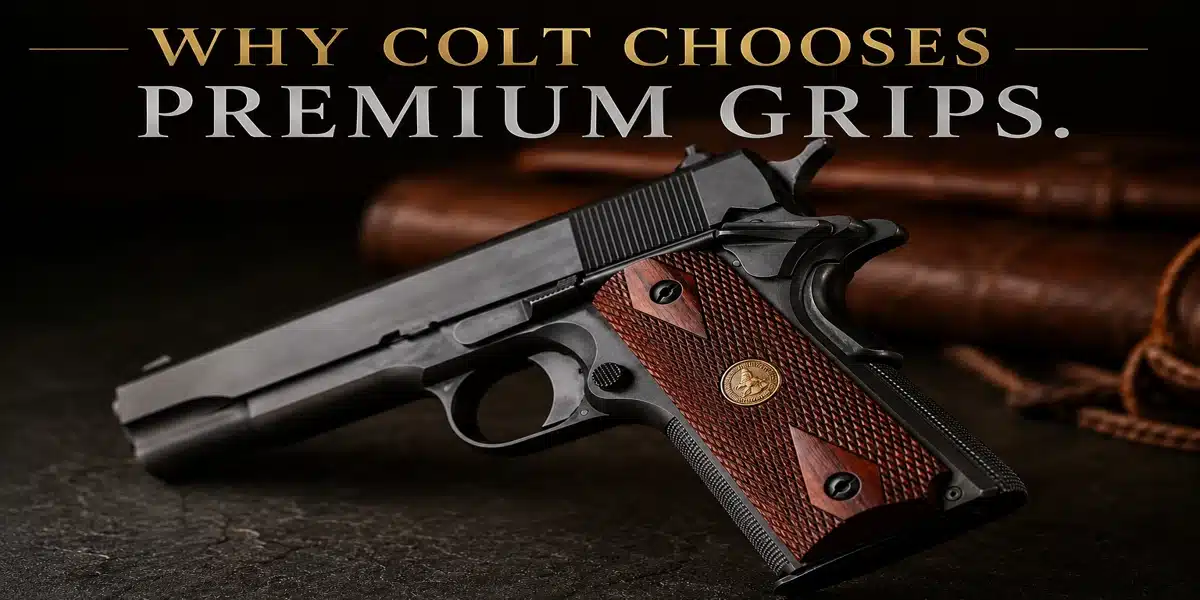
Why Colt Chooses Premium Grips?
By Thomas Pick up a Colt 1911, and your hand finds the
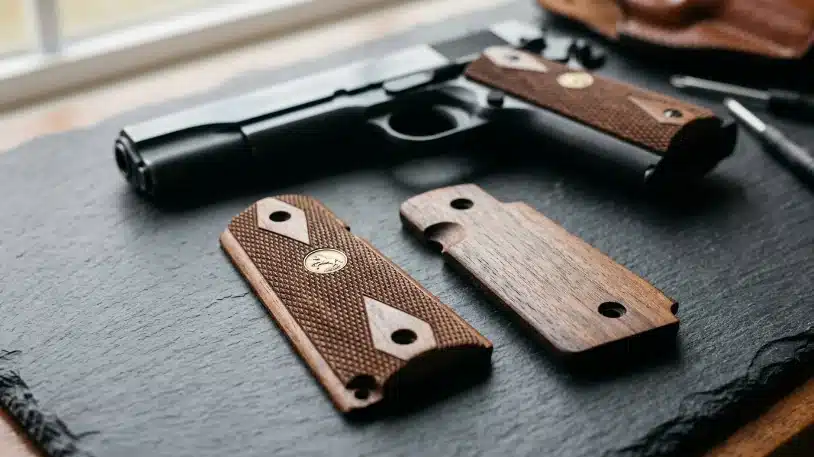
1911 Ambi Safety Grips: Do You Need an Ambi Cut? (Fitment Guide)
If your 1911 has a thumb safety on both sides, you’re shopping
What 1911 Grips Fit Rock Island? Complete Guide
If you own a Rock Island Armory 1911 and you’re staring at
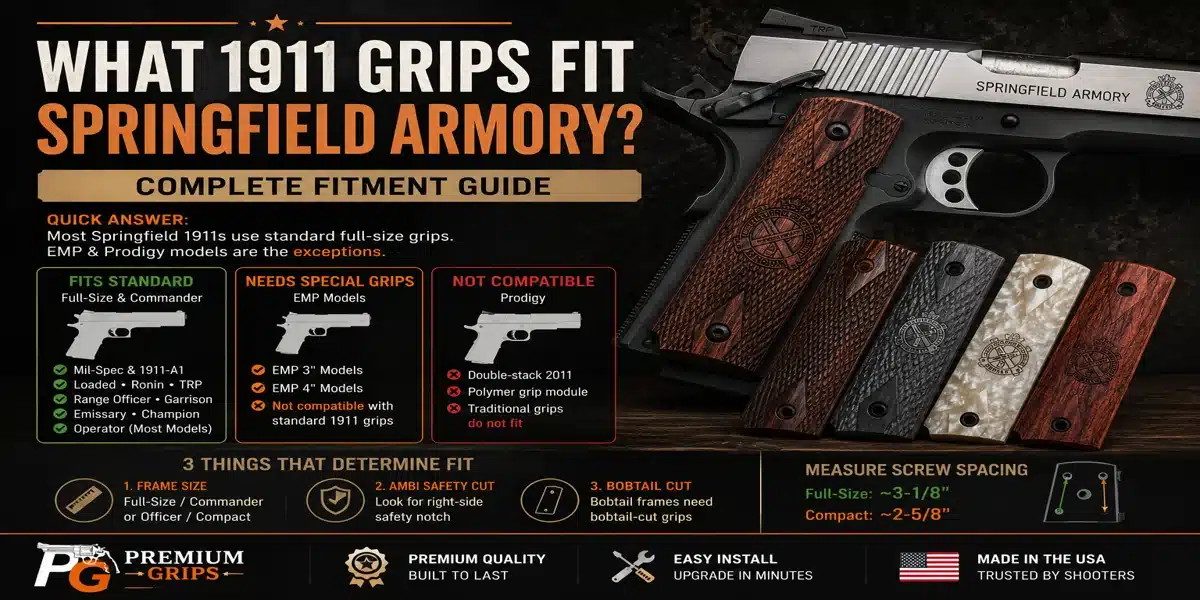
What 1911 Grips Fit Springfield Armory?
Most full-size and Commander-size Springfield 1911s take standard 1911 grips; the same