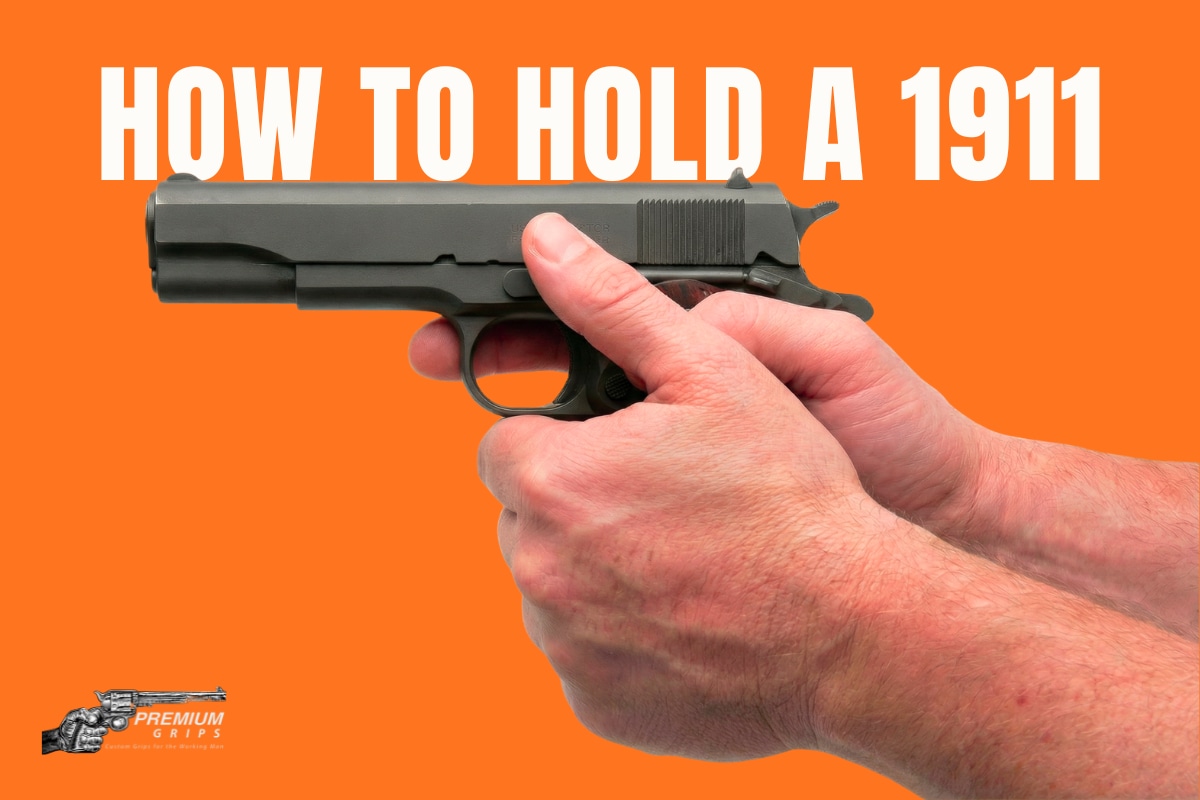
To hold a 1911 correctly, seat the pistol high in your dominant hand right under the beavertail, wrap your fingers firmly around the front strap, then add your support hand so both thumbs point forward and your palm fills the open grip panel.
This high, firm grip fully depresses the grip safety, lowers the bore axis, and keeps the pistol stable through recoil. The full step-by-step is below.
If you’ve just picked up your first 1911, you’re holding one of the most legendary pistols ever made. From competition ranges to home defense setups, the 1911 has earned its reputation through power, precision, and history. But many shooters don’t know how to hold a 1911 properly.
Remember, a proper grip affects accuracy, recoil control, safety, and confidence.
No matter if you have been using a 1911 for years or just owned one, you need to improve your grip game to make your shooting experience more comfortable.
After fitting and shooting 1911s for over 15 years and building the grips Colt ships as OEM I’ve found that most grip problems come down to two things: hand placement and the panel itself.
In this blog post, you’ll learn the right way in 5 simple (and practical) steps to perfectly holding a 1911.
Why Grip Matters More Than You Think?
What Is the Grip Angle of a 1911?
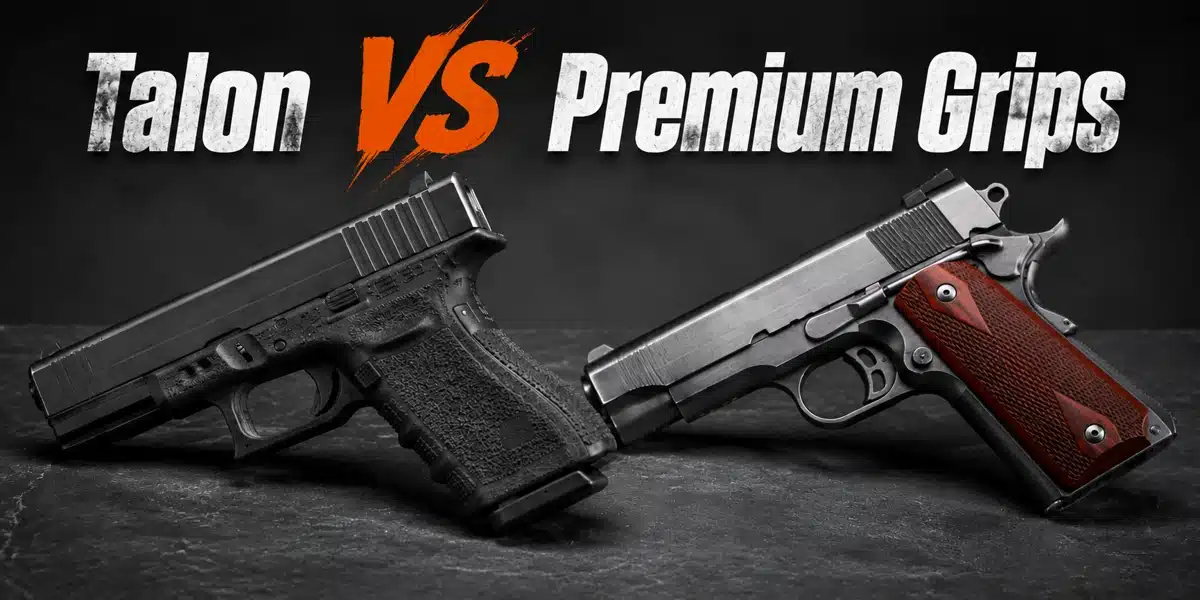
A 1911 has a grip angle of about 18 degrees, nearly square to the slide, compared to roughly 22 degrees on a Glock. That more vertical angle is why so many shooters say the 1911 “points naturally.”
Quick test: with a verified unloaded pistol in a safe direction, close your eyes, raise the gun to an imaginary target, then open them. If the sights land on target, that angle fits your hand. If they sit high or low, you’ll need a small conscious adjustment to your hold.
A 1911 has a single-action trigger, a manual thumb safety, and a grip safety. This combination makes grip technique more important than with many modern pistols.
A weak or incorrect grip can cause:
- Inconsistent recoil control
- Failure to disengage the grip safety
- Missed shots under pressure
- Discomfort or fatigue during long sessions
A strong, consistent grip does the opposite by giving you a more confident and controlled experience.
Always keep this basic principle in mind:
“Your Grip Is the Foundation of Every Shot You Fire.”
Why the 1911 Points So Naturally?
The 1911’s grip geometry is a big reason it feels so natural in the hand. Here’s how it compares to a typical striker pistol.
| Feature | 1911 | Typical Striker Pistol (Glock) |
|---|---|---|
| Grip angle | ~18 degrees | ~22 degrees |
| Bore axis | Low | Higher |
| Natural point of aim | Sights land on target easily | Often points high for new shooters |
| Trigger | Single-action, short and light | Striker, longer pull |
| Safeties in your grip | Thumb safety + grip safety | Trigger safety only |
| What this means | Grip technique matters more | More forgiving of a sloppy hold |
That lower bore axis and squarer angle are why a good grip pays off so fast on a 1911 the gun is already working with you.
Step 1: Place the Pistol High in Your Dominant Hand
The first step starts before your support hand ever touches the gun.
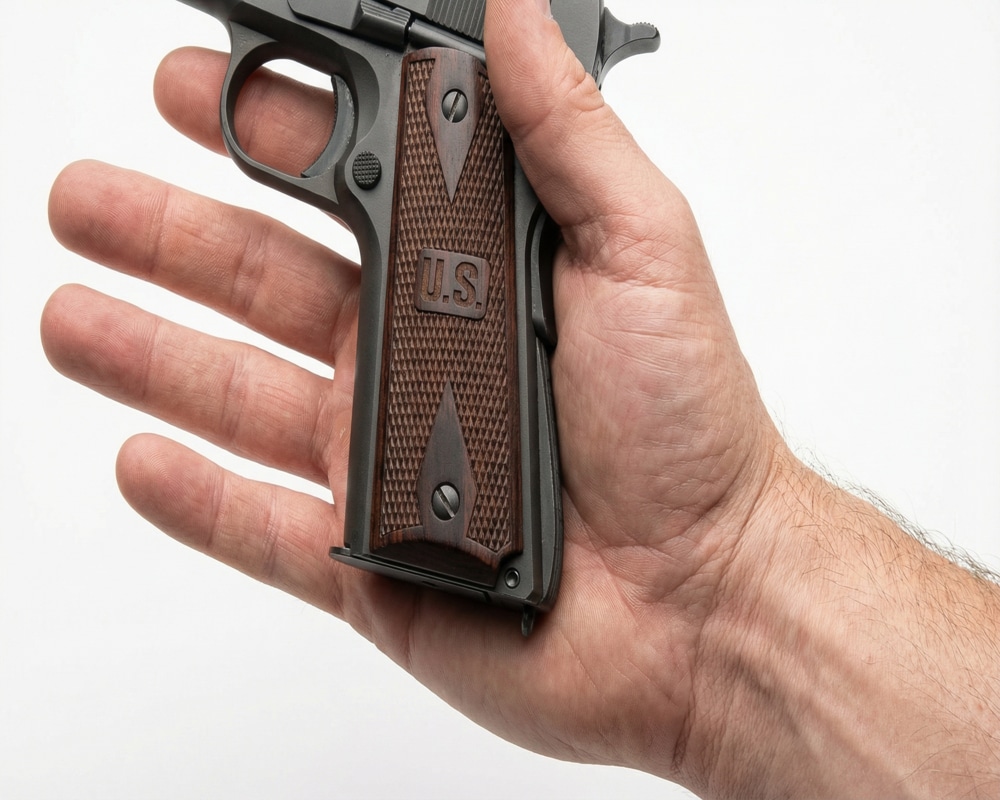
Pick up the pistol with your dominant hand and seat it high into the web of your hand, right under the beavertail. The goal is to get the bore axis as low as possible relative to your hand.
And if you are thinking that why it’s important:
- Less muzzle flip
- Faster follow-up shots
- Better trigger control
You don’t need to push thumb safety hard because the grip should be firm, not tense.
Step 2: Wrap Your Fingers With Purpose
Once the pistol is seated properly, wrap your fingers around the front strap.
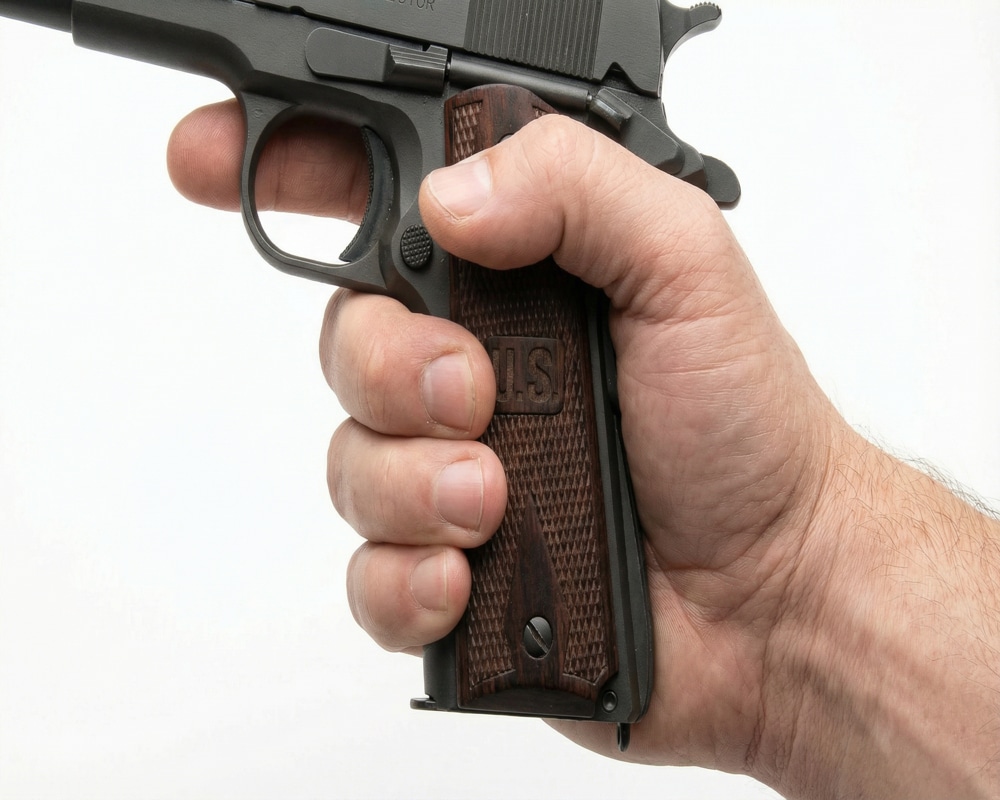
As shown in the image:
- Middle finger tight against the trigger guard
- Ring and pinky fingers applying steady pressure
- No gaps between your fingers
This is where many shooters unintentionally relax their grip.
You don’t need to crush it, but tight enough to keep it under control after the trigger is pressed. It means a stable, repeatable, and natural hold.
This step alone fixes many issues people face when learning how to grip a 1911 correctly.
Step 3: Add Your Support Hand the Right Way
Your support hand is not just “along for the ride.” It plays a huge role in recoil control and stability.
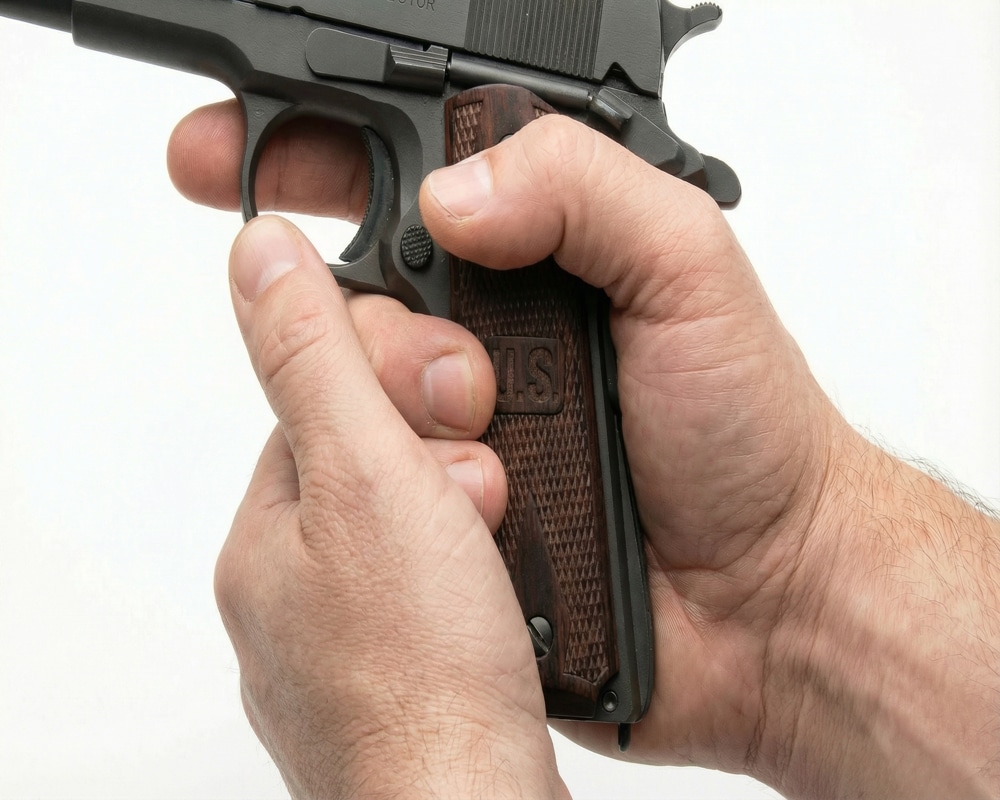
Rotate your support hand forward and fill the empty space on the grip panel. Your palm should press flat against the exposed grip area, with fingers wrapping over your dominant hand fingers.
Important tips to keep in mind here:
- Thumbs point forward, not crossed
- Support hand pressure slightly stronger than dominant hand
- Avoid pushing the gun sideways
Your support hand helps manage recoil, while your dominant hand focuses on trigger control. This balance is critical for consistent shooting.
This step is essential if you’re learning how to hold a 1911 pistol for accuracy and speed.
Step 4: Engage the Grip Safety Every Time
The 1911’s grip safety is one of its defining features, and one of the most common causes of shooter frustration.
If you don’t fully depress it, the gun simply won’t fire.
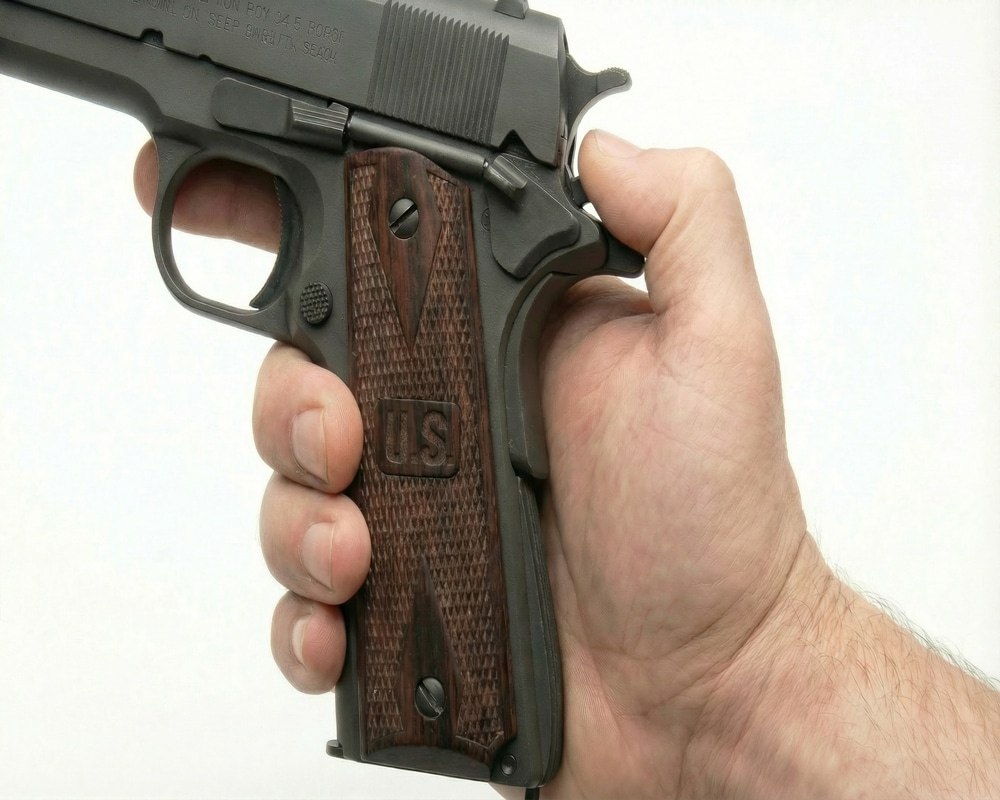
To avoid this:
- Keep a high grip under the beavertail
- Apply firm rearward pressure with your dominant hand
- Maintain consistent hand placement
This is a major part of learning how to hold and handle your firearm properly, especially for defensive or competition use.
The grip safety has been part of the 1911’s original design since John Browning drew it up, and it’s still what keeps the gun from firing unless your hand is seated correctly.
Step 5: Lock In Your Grip and Let the Trigger Work
Once your grip is set, don’t adjust it mid-string.
A common mistake is shifting your hands between shots. This leads to inconsistent point of impact and poor recoil control.
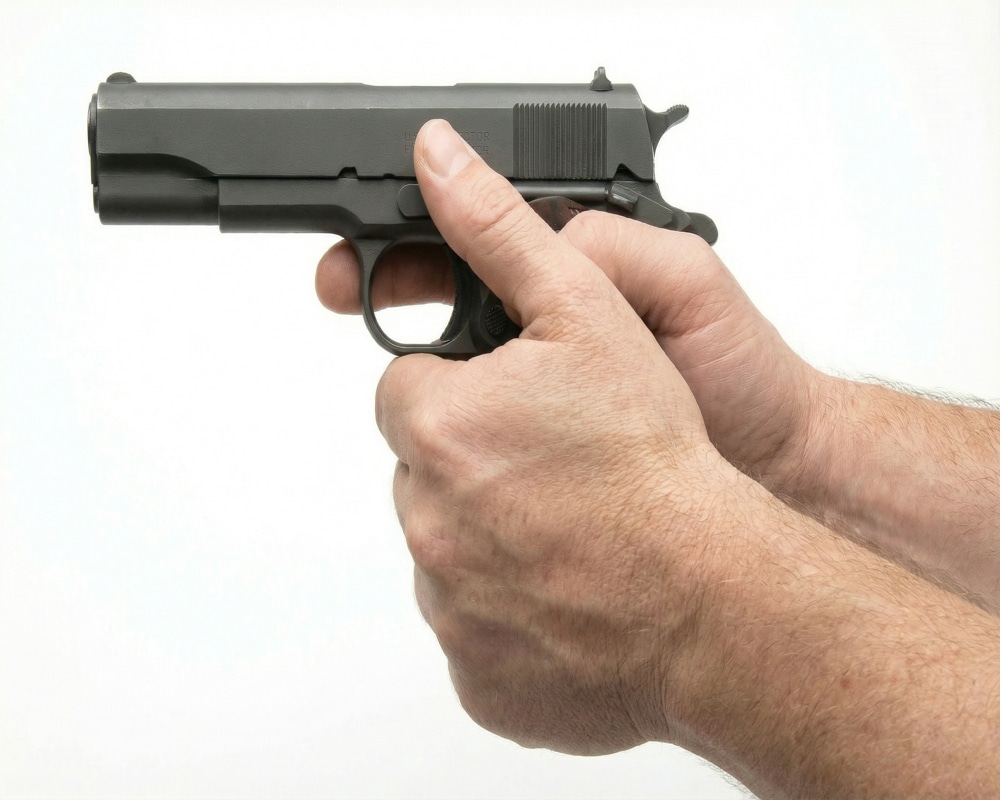
Instead:
- Lock your wrists
- Keep your grip pressure steady
- Let the trigger reset naturally
The 1911’s trigger is one of the best ever designed. A proper grip allows you to take full advantage of its clean break and short reset.
Why Does My 1911 Bite the Web of My Hand?
If the top of your hand gets pinched or cut after a range session, you’re not alone. This is the most common complaint new 1911 shooters have. It’s called “hammer bite” or “beavertail bite.”
Two things cause it:
- The hammer or grip safety pinches the web of your hand. A high grip is right, but on some older or GI-style 1911s the tang is short, so the skin gets caught.
- The grip is too thin or too slick for your hand, so your hand creeps up into the hammer under recoil.
How to fix it:
- Seat your hand high, but let a beavertail grip safety do its job of shielding the web of your hand.
- If your gun has a short GI tang, an upgraded beavertail or a grip that fills your palm better stops the creep.
- The right grip panel keeps your hand locked in one place, so it never rides up into the hammer in the first place.
A thicker or better-textured panel often fixes hand bite on its own. If your 1911 chews your hand up, your grips are usually the cheapest fix.
Common 1911 Grip Mistakes to Avoid
1911 Shooting Tips: Turning a Good Grip Into Accurate Shots
Grip is the foundation, but three more fundamentals decide where the round lands.
Trigger control. Press straight back with the pad of your finger no sideways push. The 1911’s light, short single-action pull rewards a smooth press; let it surprise you slightly instead of slapping it.
Sight alignment. Focus on the front sight, not the target, and keep the sights aligned through the entire press. Running a red dot? Focus on the target with both eyes open and let the dot float onto it.
Stance. Stand slightly forward with athletic feet shoulder-width apart, knees soft, weight on the balls of your feet. Lean into the gun a touch so your body absorbs recoil instead of fighting it.
1911 Grip Problems and How to Fix Them
| Problem | Likely Cause | The Fix |
|---|---|---|
| Gun won’t fire when you pull the trigger | Grip safety not fully depressed | Grip higher under the beavertail, firm rearward pressure |
| Shots hitting low and left (right-handed) | Anticipating recoil, squeezing the trigger hand | Press the trigger straight back, relax the grip hand slightly |
| Hand gets pinched or cut | Hammer bite from a short tang or high hand creep | Beavertail grip safety, or a fuller grip panel |
| Gun shifts in your hand under recoil | Grip too slick or too loose | More grip pressure, or a textured G10 panel |
| Failure to feed or eject | Limp wrist, weak support hand | Lock the wrists, drive the support hand in |
| Trigger reach feels too long or short | Grip panel thickness wrong for your hand | Thin panels for small hands, standard for larger |
Notice how many of these trace back to the grip itself. Technique fixes most of them. The right panel fixes the rest.
Here are a few issues we see often, and how to fix them.
Riding the Thumb Safety Too Hard
Light contact is fine, but excessive downward pressure can affect grip stability.
Loose Support Hand
Your support hand should do real work. Don’t let it float.
Inconsistent Hand Placement
Every draw and presentation should feel the same.
If you want a deeper breakdown, check out our guide on 1911 Grip Mistakes and how to fix them permanently.
Grip Comfort Is Not Just a Luxury
Here’s something many shooters overlook:
“The Grip You Use Changes How You Hold the Gun.”
- Too slick, and your hands shift.
- Too aggressive, and fatigue sets in.
- Wrong size, and your trigger reach suffers.
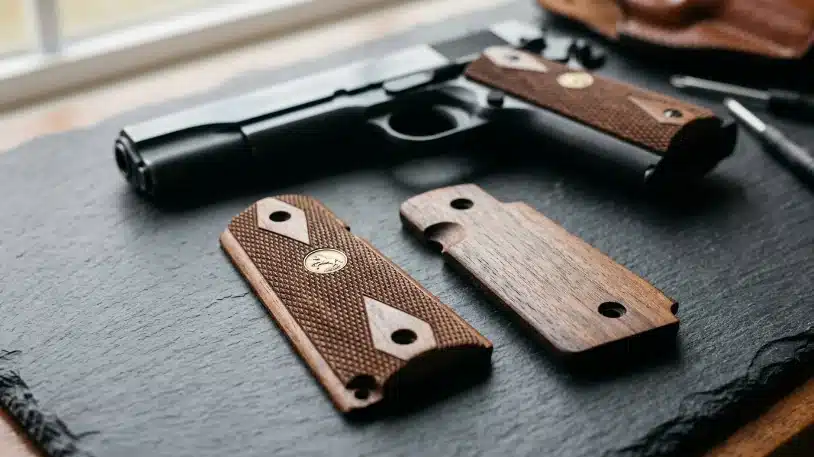
That’s why upgrading your 1911 Grips can dramatically improve both comfort and control. The right grip helps lock your hands into the correct position every single time.
Not sure which set fits your frame? See our guide on which 1911 grips fit your pistol, or compare full-size vs compact grips before you choose.
Read Also: How to Properly Engage Your 1911 Grip Safety
Match the Grip to Your Hand
Grip technique is the same for everyone. The right grip panel is not. Your hand size changes what works.
- Smaller hands or short trigger reach: thinner panels bring the trigger closer and give you a fuller wrap. Smooth or lightly checkered wood keeps it comfortable.
- Larger hands: standard-thickness panels fill the palm and stop your hand from over-wrapping.
- Sweaty or cold-weather hands: aggressive G10 texture holds when smooth wood would slip.
The best grip is the one that puts your hand in the same place every time. That is what turns good technique into consistent hits.
How to Hold a 1911 Across Different 1911 Variants?
The fundamentals stay the same, but small adjustments can help depending on the model.
For example, how you hold a colt 1911 may feel slightly different due to frame geometry, grip safety shape, or factory grip thickness.
Government, Commander, and Officer-size frames can all influence:
- Hand placement
- Balance
- Recoil impulse
That’s completely normal, you just need to focus on consistency.
Practice This Grip at Home (Safely)
You don’t need live ammo to improve your grip.
Try this:
- Unload your pistol completely
- Double-check the chamber
- Practice drawing and gripping
- Dry fire while maintaining grip pressure
Ten minutes a day builds muscle memory faster than occasional range sessions.
How to Operate a 1911: Quick Reference
- Insert a loaded magazine.
- Rack the slide fully to chamber a round.
- Engage the thumb safety (cocked and locked).
- To fire: establish your grip (depressing the grip safety), sweep the thumb safety down, and press.
- To make safe: engage the thumb safety, drop the magazine, lock the slide back, and visually confirm an empty chamber.
Always feed from the magazine, never drop a round straight into the chamber.
Why Do the Right Grips Make Learning Easier?
A good grip technique paired with poor grip panels still limits performance.
The best quality gun grips improve:
- Hand alignment
- Recoil management
- Confidence during rapid fire
Swapping grips is a 5-minute job — just match your grip screws and bushings first.
Read Also: 7 Common 1911 Grip Mistakes
Conclusion
The 1911 rewards shooters who respect fundamentals. Grip isn’t flashy, but it’s powerful.
By following these five steps, you’ve learned:
- How to seat the pistol correctly
- How to apply consistent pressure
- How to engage safeties naturally
- How to avoid common mistakes
Most importantly, you’ve built a grip you can trust. Once you understand how to hold a 1911, everything else becomes easier.
Check out our full selection of our premium 1911 Grips at Premium Grips and find the perfect match for your shooting style. With fast shipping and high-quality, we’ll have your 1911 feeling better in your hands in no time.
New to buying aftermarket panels? Here’s where to buy 1911 grips online without getting burned.
Also explore the 1911 compact size and 1911 full-size grips.
Frequently Asked Questions
Is there a correct way to hold a gun?
Yes. A correct grip keeps the muzzle pointed safely, allows full control of recoil, and lets you operate the trigger and safeties comfortably. Safety and consistency matter more than hand size or shooting style.
Should you hold a gun up or down?
A gun should always be pointed in a safe direction. At the range or during practice, this usually means downrange or slightly downward unless actively aiming at a target.
How to carry a 1911 with one in the chamber?
A 1911 is commonly carried “cocked and locked,” meaning one round in the chamber with the hammer cocked and the thumb safety engaged. This method is safe when paired with a proper holster and correct handling.
Where to buy grip tape or grip enhancements for a 1911?
Grip enhancements can be found online through firearm accessory retailers. For purpose-built 1911 grip upgrades that improve control and comfort, Premium Grips offers a wide range of options.
How do you hold 1911 correctly?
To hold a 1911 correctly, use a high, firm grip that fully depresses the grip safety and keeps the pistol stable during recoil. Your support hand should wrap around the grip to add control while your trigger finger stays relaxed and precise.
Why won’t my 1911 fire when I pull the trigger?
The most likely cause is an unengaged grip safety. If you don’t fully depress it with a high, firm grip, the gun won’t fire. Keep your hand seated high under the beavertail and apply steady rearward pressure.
How can I improve my 1911 accuracy?
Build on a consistent grip with three things: press the trigger straight back, focus on the front sight, and use a slightly forward athletic stance. Then practice with a mix of live fire, dry fire, and structured drills.